Showing posts with label Learning. Show all posts

Monday, May 17, 2021

Essay topic: It is said that musicians and artists are less valued by today's society than scientists and technology experts.

       Do you think that artists like writers, musicians and painters are valuable to society? The artist is the custodian of the nation's cultural heritage. They define how nations think and act and keep it the same. There are three reasons musicians and painters are valuable to society.

 The main reason is musicians connect people from diverse backgrounds and different ages through music, there’s nothing quite like a song to capture what was going on culturally at that time, and like a time capsule, it’s captured for eternity. The slang and language usage are so indicative of the times, and you can probably recall exactly when a song was made based on what is mentioned. The mentions of current fashion trends, technology, popular foods and celebrities are some of the most telling, and they eternalize key parts of our culture that might otherwise be forgotten. 

Furthermore, Artists is provides opportunities for language development of children through drawing and coloring, children are naturally curious. From the minute they gain control of their limbs, they work to put themselves out into the world to see how it all works. They explore, observe and imitate, trying to figure out how things operate and how to control themselves and their environments. This unrestricted exploration helps children form connections in their brain, it helps them learn and it’s also fun. Art is a natural activity to support this free play in children. The freedom to manipulate different materials in an organic and unstructured way allows for exploration and experimentation. These artistic endeavors and self-directed explorations are not only fun, but educational as well. Art allows youth to practice a wide range of skills that are useful not only for life, but also for learning. All kinds of art can affect our mood in a positive way, making us feel happier, calmer, or even inspired to do something. Everywhere you go art is evident. Parks often use sculptures to add interest and to inform people. 

In addition, Music can improve confidence and resilience, a digital age where many services and products are instantly available with the click of a button, learning a musical instrument provides a platform for people to achieve through discipline and perseverance. There are many skills required in order to learn how to play a musical instrument like technique; reading music; expression; listening; and as you continue to perfect these skills, you build resilience. Similarly, as a member of an ensemble you will develop strong teamwork and leadership skills, and a real sense of achievement and pride when performing difficult passages of music, all of which come together to build confidence. These are not only skills required to learn music but important life skills that can also be used in employment and your wider social life.

 To summarize, musicians and artists are for the soul. We cannot live without music because it helps us a lot from our mood and stress so musicians and artists can provide us with too much inspiration to develop our experience and our society. In my opinion, music can raise everyone's mood, get them excited and make them calm and relax .

Wednesday, July 29, 2020

How To Debate

We live in a world where we interact with others all the time. Debate is a formal way of communicating, it builds confidence and self-esteem debate is not an undisciplined shouting match and takes place between two teams of trust in a clear vision. The debate is rigid, with both groups arguing over topics that are consistent or contrary to what you believe.
Law of Debate
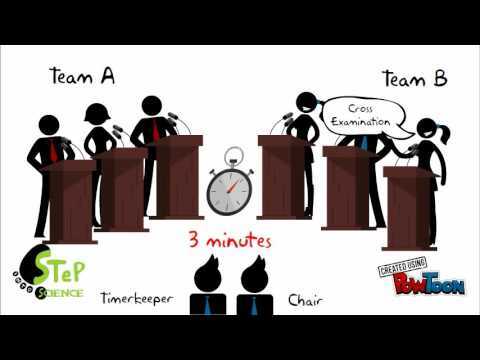
The debate consisted of two groups, the Positive group and the Negative group, in which three members. Decided the first the Positive groups to start the debate, and then the first member of the Negative group. This pattern was reserved for the second and third members of the group. Each of the spoken at a set time, with a bell to let them know how much time they had to speak. All debates have to start with the President, Ladies and Gentlemen, members who have an interesting opening speech that was so important.
Each member has the right to ask questions to the other group while they are speaking and those who are asked can object.
Next layout the debate is set up as shown below
STeP Structure of Debate - YouTube
Functions in Debate: 
CHAIRMAN
TIMEKEEPER
AFFIRMATIVE TEAM
NEGATIVE TEAM
SPEAKER AREA
AUDIENCE
ADJUDICATOR
Highlights in the debate
In the debate, the content is divided into 3 main parts:
-          Reasoning analysis: is the argument and evidence of a group's case and the preparation for rejection to the other party, it also includes the definition and interpretation of the subject matter.
-          A presentation: is how members present their arguments, it is how each member speaks, which includes eyes, open gestures speech and voice.
-          Structure: is the structure of the speaker's speech and the way in which the speech is embedded in the speech of another speaker.

Definition and interpretation of topics
The definition of a topic, including the first sentence or keywords of the topic, a clear interpretation of what is important for the whole debate. Definitions and interpretations of subject matter should be specified by the first member of the district group. Negative groups must agree or disagree with the definition of Positive group interpretation.
Setting up your debate: It's important that you want to be clear, concise, and easy to understand. Using examples, words, or similarities can help you emphasize complex words, an effective way to build or prepare our arguments arrange the first point to the last point. Lastly, people generally remember what was said last. In presenting and writing your argument, remember to explain what you want show let them know how big it is and why it is true with specific examples or islands, not just personal claims to support your case.
Presentation or speech: Everyone's personality and style when it comes to debate it is helpful to remember that ¸
1/. Use your eyes to look at the audience.
2/. Use your hands and body naturally to emphasize the point.
3/. Speak clearly.
4/. Do not speak too fast.
Debate is not a talk for you, there are no different people each group has an account, a project and a topic, defend the team's interpretation firmly and refuse to respond to another team (Except for the first speaker)
Working in groups and teams: View as single page

What is Public Speaking?

Tuesday, July 28, 2020

How to make public speaking better

Before interpreting the main points of public speaking we should first understand the definition of the word. Public speaking is usually a presentation that is broad cast live in front of an audience. Public speaking can cover a wide variety of topics.
How To Make A Good Presentation - 7 Tips From The Experts | Biteable

The important of public speaking: Speech has the power to inform, persuade, educate, and even entertain, and spoken words can be more powerful than written words. Whether you are a small business owner, a student, or someone with a passion for doing something you will benefit from public speaking such as:
-          Build self-confidence
-          Better research skills
-          Stronger speaking skills
-          Ability to advocate or debate for various causes
The fact is that public speaking is a skill you can learn to help you excel in public speaking. We look at these 4 combination.
1/. Effective speech writing
The first thing you want to do is write an orderly and interesting speech, because no matter how eloquent or cool you are, your speech will not have a live audience if you do not have episodes, far away and disorderly.
2/. Overcoming the fear of speaking
The fear of public speaking is quite common and can hinder you if you allow it. If you do not feel confident when giving a speech, your audience will not pay attention, making your presentation less effective.
3/. Perform a speech or practice speech
Even if you are not afraid to speak in important step to effective speaking. If you are in hurry, you may think that you should skip your speech practice to save time, but it is not a good idea to practice your speech not only to improve you public speaking skills but also increase awareness of what you need to say that makes your speech smooth.
4/. Providing public speaking
Now that you have written well, have confidence in public speaking, rehearse, are you ready to give a good speech, or are there some tricks you can use on the day of your speech to make it smoother! Remember that you are presenting in front of an audience in a specific place and time while you are speaking there should also be some common concerns for the audience, including:
-          Can the audience hear me clearly?
-          Does this place have the equipment I need?
-          Is there enough seating for all the audience?
So there are 3 types of public speaking
  1. To notify
  2. To persuade, encourage or take action
  3. To entertain
What is Debate?

Sunday, June 28, 2020

How to setting goals in the future.

I.  Key elements in goal setting

Writing specific goals can be easy. The hardest part to overcome is planning how to reach the goal and when you do that we need to focus on the specific goals and objective that are in line with your plan. However, the path you have to take is still subject to some adjustments, depending on the evolving resources, the situation at stake.

Setting Goals

The following are the elements that make it possible for you to plan your goals…


Elements of goals setting
-Is it achievable?
           -What would you do?
           -What will you do to reach your goals?
           -Does it fit your ability?
           -What will you do to stay committed to it?
           -Your resource?

Example: This year I will do my best to get an A.
Goal: This year I will do my best to get an A.


Is it achievable?
What will you do too reach the goals?
-Spend time and try to study.
√
-Study part time.
√
-Try to do exercises
√
Detailed steps and actions?
-Study with teacher and classmates.
?
-Make a schedule to allocate study time by subject.
maybe
Your resources?
-Money
?
-Need calculator to verify answers when doing homework or exercises
discussing with family

II. The key to successful goal setting

  1. Define what you truly love.
You must ask yourself what you love the must in your life. You should follow your heart because when you do what you love to do, you will never tire of doing it or you have no problems.
  1. Write down your goals clearly.
Once you have clearly written your goals, you will see them more clearly and they will appear, meaning that you have created something or more impact.
  1. Set a specific date for your goal.
Get specific dates on your goals: what month? What year? And what you want to achieve, the goal or decision, without a clear choice, is like having no impetus or urgency to achieve the goal, and it is neither realistic at the beginning nor at the end.
  1. Set a list of activities out of your mind or a good way to succeed.
Sometimes when you are traveling, reading a book, and you inspire a good idea, come up with a list of your activities and try to do what you have written. Plus, that list gives you a glimpse of the big picture from your destination, and it's tailored to what your plan wants.
  1. Make a list of those activities to plan.
Make a list of activities, taking priority, and sequentially, taking a few minutes to decide which ones to follow, and which one next. With coding that will clearly plan your activities, yes! you will be more motivated to do the job than you would without a clear goal.
  1. Start acting immediately.
You won't get everything if you have on action, Acting is the path to your goal. When you do the action you with encounter some problems, then you have a way to find strategies. To cultivate without changing the direction of your purpose.

III.  Barriers to goal setting

In setting goals, you with encounter some of the following'…
-          Abandonment persists in the face of obstacles during the course of action.
-          Can't achieve it because of setting too many goals.
-          Target time does not look at resources causing performance problems.
-          Not to value failure to learn it in later goals.
-          The goals set are negative.
-          Lack of encouragement or support in the face of obstacles.

Monday, June 1, 2020

How to building trust

  • Building Trust
-          The definition of self-confidence.
Self-confidence is a feeling of self-worth and ability. So if you are a self-confident person, it means you feel good about yourself and have the ability to achieve what you want.

How Teachers Can Nurture Students' Sense of Trust | Share to Learn

            An example of self-confidence. Thinking of example of leadership on your own is a great way to understand its importance and why you need it.
  • The same goes for the following example of a basketball player
-He didn't enjoy holding the ball the first time, and he didn't like having people watch him play.
-He didn't anticipate he had a less successful opportunity to hit the ball.
-He always thought to himself that it wasn't the ball.
  • Instead, the other guy was a confident basketball player from the moment he held the bat.
-He always thought he could do it right, because he was a good basketball player.
-He can expect himself to have a lot of chance to hit the ball.
-He was too happy at first and he liked when people watched him play.
+ You can think of confidence as such
-          Feeling happy and positive
-          Emotions help you get what you want to achieve faster and easier.
-          The feeling that you create yourself through the way you think of something like this overall, having your self-confidence makes you feel good and you can make it yourself.
One important thing to note is that even though it is not right to have confidence in yourself or to be lacking in self-confidence is important. More than a lack of faith in yourself.
o   The difference between confident behavior and distrustful behavior.
Behave confidently
A distrustful acceptance
-Do what you think is right, even if others criticize you.
-Willing to take risks to achieve something better.
-Compassionate acceptance.
-Confess you mistakes and learn from them.
-Change your own behavior according to what others think.
-Avoid taking risks and don't want to get out of it.
-Try to cover up errors.
-Conflict with praise.

Friday, May 22, 2020

How to practice English listening skills (without spending extra time)

Let see what do we know how to become a good listener.)

How to practice English listening skills (without spending extra ...

This video explains why most people fail to improve their listening. You'll also learn how to practice English listening without spending extra time. (Warning: the last section of the video might surprise you.

Thursday, May 21, 2020

How to improve your English speaking skills (by yourself)

Watch this if you want to improve your speaking, this easy tips will tell you.

How to improve your English speaking skills (by yourself) - YouTube

Discover a way to practice speaking English alone to improve your spoken English. This approach can help improve several aspects of your pronunciation, your grammar, your sentence structure, your vocabulary, and your ability to communicate with others in English.